Black pine (Pinus nigra) is a moderately variable species of pine, occurring across southern Mediterranean Europe. Pinus nigra is a tree of the Mediterranean forests, woodlands, and scrub biome. There are remnant populations in the Mediterranean conifer and mixed forests ecoregion. It is found at elevations ranging from sea level to 2,000 metres, most commonly from 250–1,600 metres. Pinus nigra is a large coniferous evergreen tree, growing to 20–55 metres tall at maturity. The bark is grey to yellow-brown, and is widely split by flaking fissures into scaly plates, becoming increasingly fissured with age.
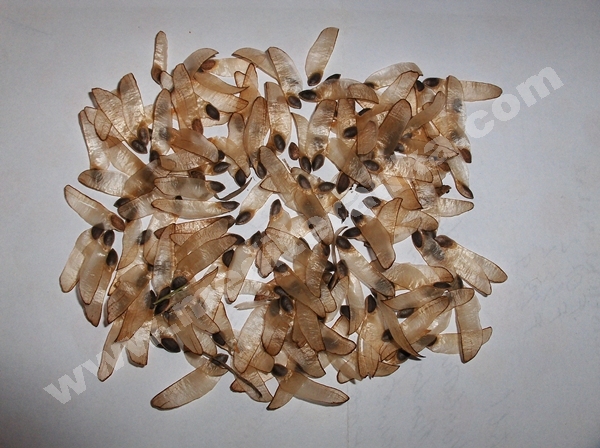
The leaves (needles) are thinner and more flexible in western populations. The ovulate and pollen cones appear from May to June. The mature seed cones are 5–10 cm long, with rounded scales, they ripen from green to pale grey or yellow in September to November, about 18 months after pollination. The seeds are dark grey, 6–8 mm long and they are wind-dispersed when the cones open from December to April. Sexual maturity is reached at 15–40 years, large seed crops are produced at 2–5 year intervals. P. nigra is moderately fast growing, at about 30–70 cm per year. It usually has a rounded conic form, that becomes irregular with age. The tree can be long lived, with some trees over 500 years old. It needs full sun to grow well, is intolerant of shade, and is resistant to snow and ice damage.
Offer:
40 seeds